| Home > All By Location regional map > Pittsburgh West > Union Bridge 1875-1907 | |||
|
|
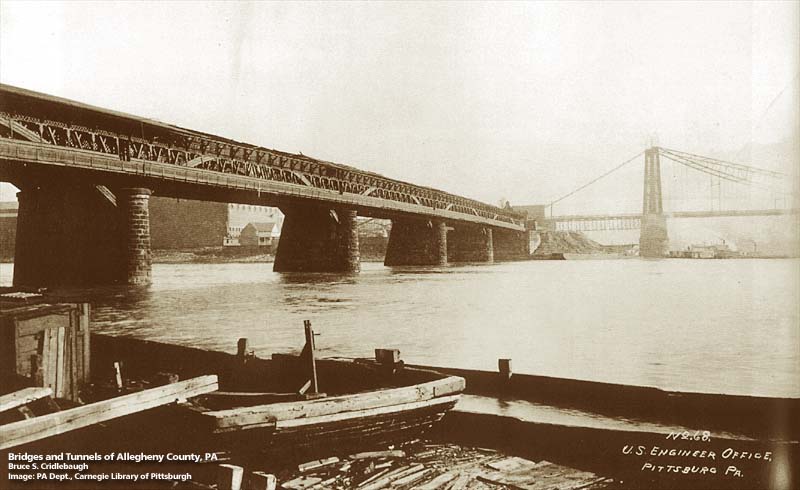
View toward the Point 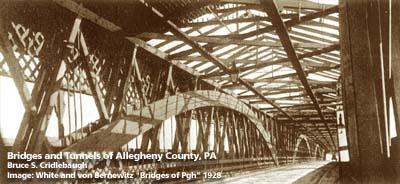
Interior 
Elevation drawing looking downstream OFFICIAL NAME: Union Bridge OTHER DESIGNATION: LOCATION: Pittsburgh USGS 7.5" Topo Quad - UTM Coordinates: Pittsburgh West - Zone 17; 0584 4477 CARRIED: horse-drawn vehicles BETWEEN: -- Allegheny Av on right descending bank of Allegheny River -- Water St on left descending bank of Allegheny River CROSSED: -- Allegheny River at mile 0 TYPE OF CONSTRUCTION / DESIGN: Burr arch truss LENGTH OF MAIN SPAN: TOTAL LENGTH (including longest elevated ramp): HEIGHT OF DECK: 37-40 ft clearance YEAR ERECTED / ENGINEER: 1875; removed 1907 ADDITIONAL INFO: This was the first bridge to link the Point with the opposite shore of either river. It was built so low that it obstructed river traffic . By 1899, it was a major cause of the Secretary of War to require all bridges on Pittsburgh's rivers to be raised higher or replaced. The Union Bridge was the last wooden river crossing to be built in Pittsburgh. The same year the Union Bridge was completed, the nearby Point Bridge was begun -- primarily of iron. Whereas the Union Bridge put 4 piers in the river and only allowed a 40-foot vertical clearance (both factors leading to its early demise), the Point Bridge had a single 800-foot span which crossed 83 feet above the river. That the Union Bridge was constructed in wood may seem all the more unusual considering that John Roebling had crossed the Allegheny River at Sixth St with a wire rope suspension bridge less than 20 years earlier. The low clearance and multiple piers showed a lack of foresight, but the wooden construction is also an indication of the caution and skepticism of adopting new materials and technology. Inconsistent quality of early iron and the experimentation of converting wooden trusses to metal led to many failures of iron bridges. Even most of the first iron trusses would be replaced in the early 1900s with steel. More information from Historic American Engineering Record (pages 7 and 10.) FIELD CHECKED: INFO SOURCES: HAER PA-3, PA-4, PA-5 Submit info or inquiry - share some facts or ask a question. Introduction -- Nearby Structures Page created: Last modified: 04-Nov-2000 |
View Larger Map 
| |
| copyright: © Bruce S. Cridlebaugh 1999-2008 All Rights Reserved | |||